Bamboo Eats Blades: A Materials Problem Disguised as a Yard Chore

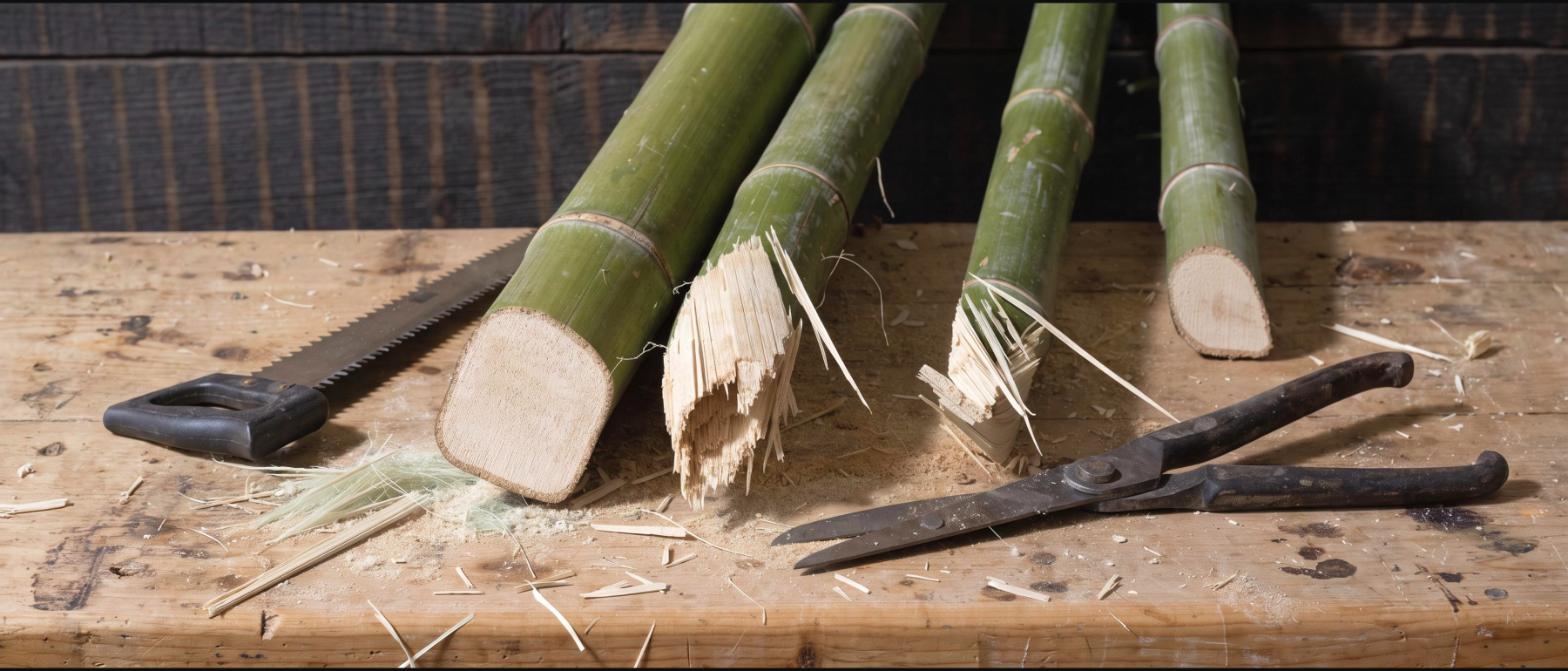
Cut bamboo culms on a workbench, one cut cleanly square and another crushed and splintered, beside a saw and loppers

Most people approach bamboo the way they approach a shrub: grab whatever is in the shed, apply force, get frustrated. Then the loppers crush the stem into a shredded mess, the wood saw binds halfway through, and an hour later the blade is noticeably duller than it was at breakfast.

None of that is a technique failure. Bamboo is a different material from wood, and the tools that work on it work for reasons worth understanding.

Why Your Blade Dies

Extreme close-up of worn, rounded saw teeth with pale plant fibres caught between them

Bamboo deposits silica in its outer tissue — the hard, glassy skin that gives a culm its polish. Reported silica content varies widely by species and by where in the plant you measure, but the practical upshot is consistent: you are cutting a fibre composite with an abrasive outer layer, not a stick.

Abrasion dulls differently from impact. A blade does not chip; it rounds over. That is why the saw feels fine for the first few cuts and progressively worse after, and why people conclude the bamboo “got harder” further up the clump.

Why the Cut Tears Instead of Severing

Cross-section of a bamboo culm showing the hollow centre and thick fibrous outer wall

Two structural facts drive this. Bamboo’s strength runs almost entirely along the fibre — it is extremely strong in tension lengthwise and weak across the grain. And the culm is a hollow tube with solid diaphragms only at the nodes.

So a bypass lopper, which severs by shearing two blades past each other, tends to crush the tube flat before it cuts, and the wall then splits along its length. An anvil pruner is worse: it is designed to squash material against a flat plate, which is precisely the failure mode you are trying to avoid.

What works is a fine-toothed pull saw that cuts on the pull stroke — the blade stays in tension, the kerf is narrow, and the hollow tube is not loaded sideways. Cut just above a node, where the diaphragm supports the wall and stops the split. A good overview of what holds up over a season is worth reading before buying; most comparisons of the best tool for cutting bamboo end up at the same place, which is a sharp pull saw for culms and loppers only for thin new growth.

Watch: favourite bamboo clearing tools compared
Watch: Our Favorite Bamboo Clearing Tools (YouTube)

Two Things That Are Not Optional

Eye protection. A culm under tension releases suddenly, and a split bamboo edge is sharp enough to matter.

And cut stubs flush to the ground, not at ankle height. A cut culm leaves a rigid, often sharply angled spike — one of the genuinely hazardous things in a yard, and the reason bamboo removal injuries tend to be puncture wounds rather than cuts.

Buy one good saw and keep it for bamboo only. Mixing it with dirty wood work will finish the edge faster than the bamboo does.


Spotlight on the Off-Road Niche: When Your Customers Know More Than You Do

A modified 4x4 with a steel bumper and roof rack on a rocky desert trail at sunset

We looked at the garden niche a while back because it is crowded and still winnable. Here is a harder one that rewards the same discipline in a much more literal way: the off-road and overlanding aftermarket. It is a useful case study for anyone selling online, because in this niche a vague product page does not just underperform. It generates a return.

Customers Who Know the Answer Already

A garage workbench with aftermarket vehicle brackets, bolts and a torque wrench under a lamp

Most ecommerce advice assumes a browsing customer who can be persuaded. That is not who shops here. This buyer knows their year, model, trim, cab length, bed length, suspension height and which bracket the previous owner already drilled. They are not asking whether they want the part. They are asking one question, and it is not a marketing question: will this bolt to my truck.

Get it wrong and a sixty-pound steel bumper goes back on a freight pallet. There are few niches where sloppy product data costs you this directly, which is why the good shops treat their fitment table as the most important content on the site.

The Traffic Lives in the Long Tail

Almost nobody searches “4×4 parts”. They search “2015 4Runner rock sliders” or “third gen Tacoma rear bumper no tire carrier”. A shop selling off road custom parts that publishes one generic category page for sliders is invisible for all of it, while a competitor with a page per fitment combination quietly collects the whole set. The pages are less glamorous and there are a lot more of them, but each one matches a buyer who is already holding a credit card.

This is the practical version of the advice everyone repeats about long-tail keywords. It is not about stuffing variations into a paragraph. It is about accepting that your catalogue structure is your keyword strategy.

Watch: How to Build a Profitable Auto Parts Business Online
Watch: How to Build a Profitable Auto Parts Business Online (YouTube)

Content the Community Will Actually Link To

A laptop on a desk showing a product catalogue grid, beside a notebook and coffee

The link building here writes itself if you are honest. Publish real install guides: photographs of the actual job, torque figures, the trim pieces you have to cut, the extra hardware nobody mentions, and how long it genuinely took. Forum members will link to that without being asked, because it saves them an afternoon. Thin content dressed up as a guide gets ignored by people who can tell the difference immediately.

The Wider Lesson

Any niche where the customer knows more than the seller punishes vagueness and rewards precision. Fitment data, honest photographs, specifications that are actually correct. It is less fun than brand storytelling, and it is what separates the shops that last from the ones that quietly disappear.